A clear brief gets you better proposals, more accurate timelines and fewer surprises. Here is what to include when you brief a web, app or software development company, with a template you can copy.
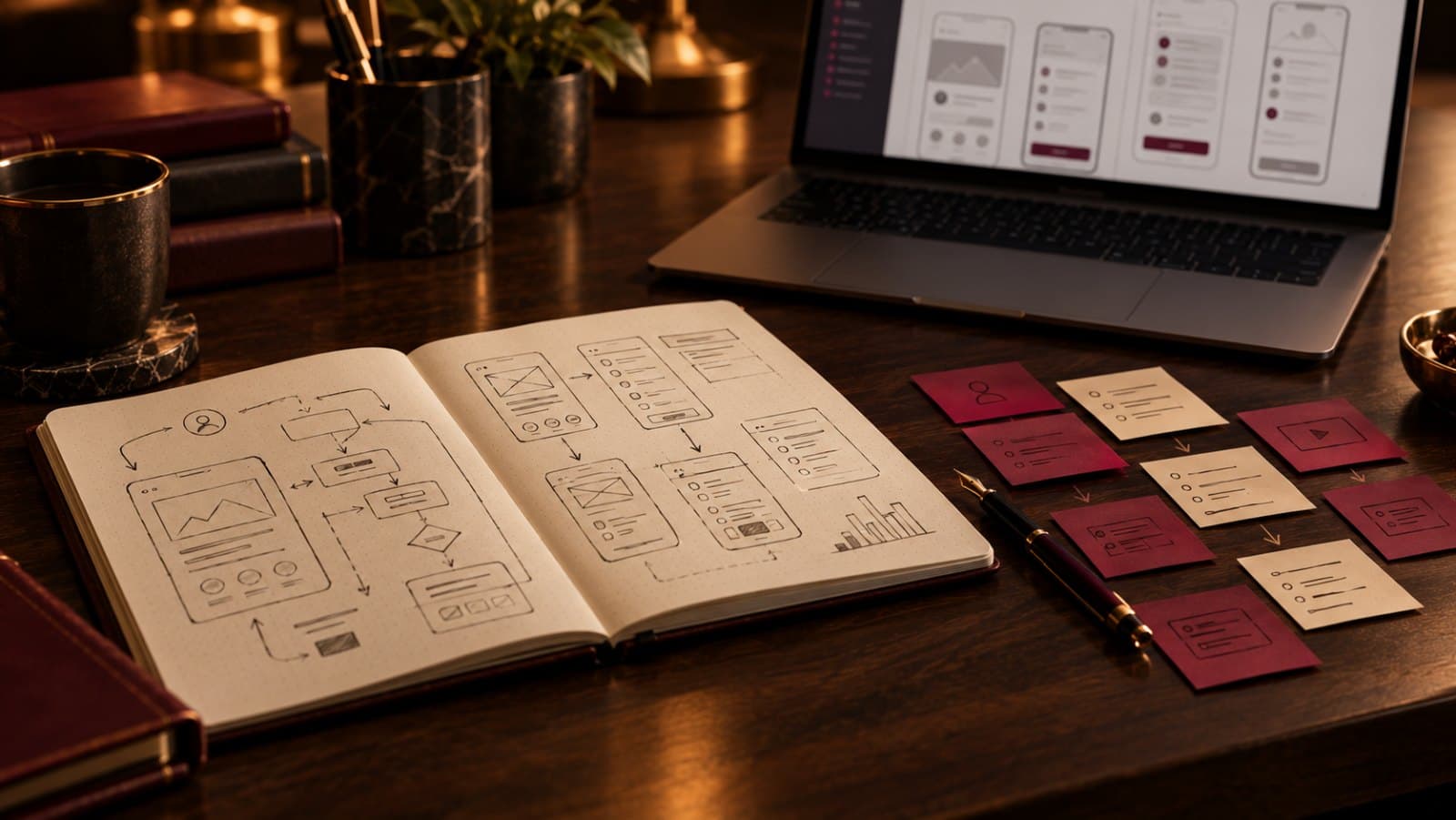
Short answer: a good software development brief explains the problem you are solving, who the users are, what the first release must do, what it must connect to, your timeline and constraints, and how you will measure success. It does not need technical detail. Two to three pages is enough for a development company to give you a useful proposal.
Why the brief matters
Development partners can only quote on what they understand. A vague brief leads to vague proposals that are impossible to compare, and to projects that grow in scope halfway through. A clear brief gets you sharper questions, realistic timelines and proposals you can compare like for like.
What to include
1. The problem
Describe what is not working today and why it matters. "Parents call the school office all day for updates" is more useful than "we need an app".
2. The users
List each type of user and what they need to do. An admin, a customer and a field technician will need very different screens.
3. The first release
List the features the first version must have to be useful. Then list the features that can wait. This one step does more to control timelines than anything else.
4. Platforms
Website, web app, iOS, Android, or all of them. Say which matters most at launch.
5. Integrations
Payment gateways, CRMs, ERPs, accounting tools, email and SMS, maps, existing databases. Integrations are often where hidden effort lives.
6. Content and languages
Who writes the content, and in which languages. Bilingual English and Arabic products need to be planned from the start.
7. Design
Do you have a brand and designs, or do you need them? Share links to products you like and why.
8. Timeline and constraints
Launch dates, events, investor milestones, compliance requirements and anything fixed.
9. Success measures
How will you know it worked? Bookings, sign-ups, hours saved, fewer support calls.
10. Ownership and process
State that you expect to own the code, designs and accounts, and how often you want to see progress.
A template you can copy
- Project name and one-line summary
- The problem today, in two or three sentences
- Users and what each must be able to do
- First release: must-have features
- Later: nice-to-have features
- Platforms: website, web app, iOS, Android
- Integrations and existing systems
- Languages and who provides content
- Brand and design status, with examples you like
- Timeline, key dates and constraints
- How success will be measured
- Ownership, NDA and how you want to work together
Common mistakes
- Listing every feature you can imagine as essential for launch.
- Leaving out integrations until after the proposal.
- Choosing a technology before the problem is clear.
- Skipping how success will be measured.
Frequently asked questions
How long should a software brief be?
Two to three pages is usually enough. Clarity matters more than length.
Do I need technical knowledge to write a brief?
No. Describe the problem, users and outcomes. A good development partner will turn that into a technical plan.
Should I send the brief to several companies?
Yes, and send the same brief to each, so you can compare proposals fairly.
Can The BrandBerry help us write the brief?
Yes. Our free project planner gives you a structured starting point in a minute, and our discovery calls turn rough ideas into a clear scope and plan.
Want this for your brand?
Book a free strategy callKeep reading
How to Choose an App Development Company in Dubai (2026 Buyer's Guide)
Dubai has hundreds of app developers claiming to be number one. Use these criteria to shortlist a partner that will ship a product UAE users actually keep.
9 July 2026 · 8 min readMVP Development for US Startups: A Step-by-Step Guide (2026)
How US founders scope, design and launch a minimum viable product in weeks, and how to choose the right MVP development partner.
14 May 2026 · 9 min readHow to Choose a Branding Agency in the USA: A 2026 Guide for Founders
The best branding agency for a US company is the one that understands your category, puts senior people on your account and can show work that moved real businesses. Here is how to tell them apart.