How US founders scope, design and launch a minimum viable product in weeks, and how to choose the right MVP development partner.
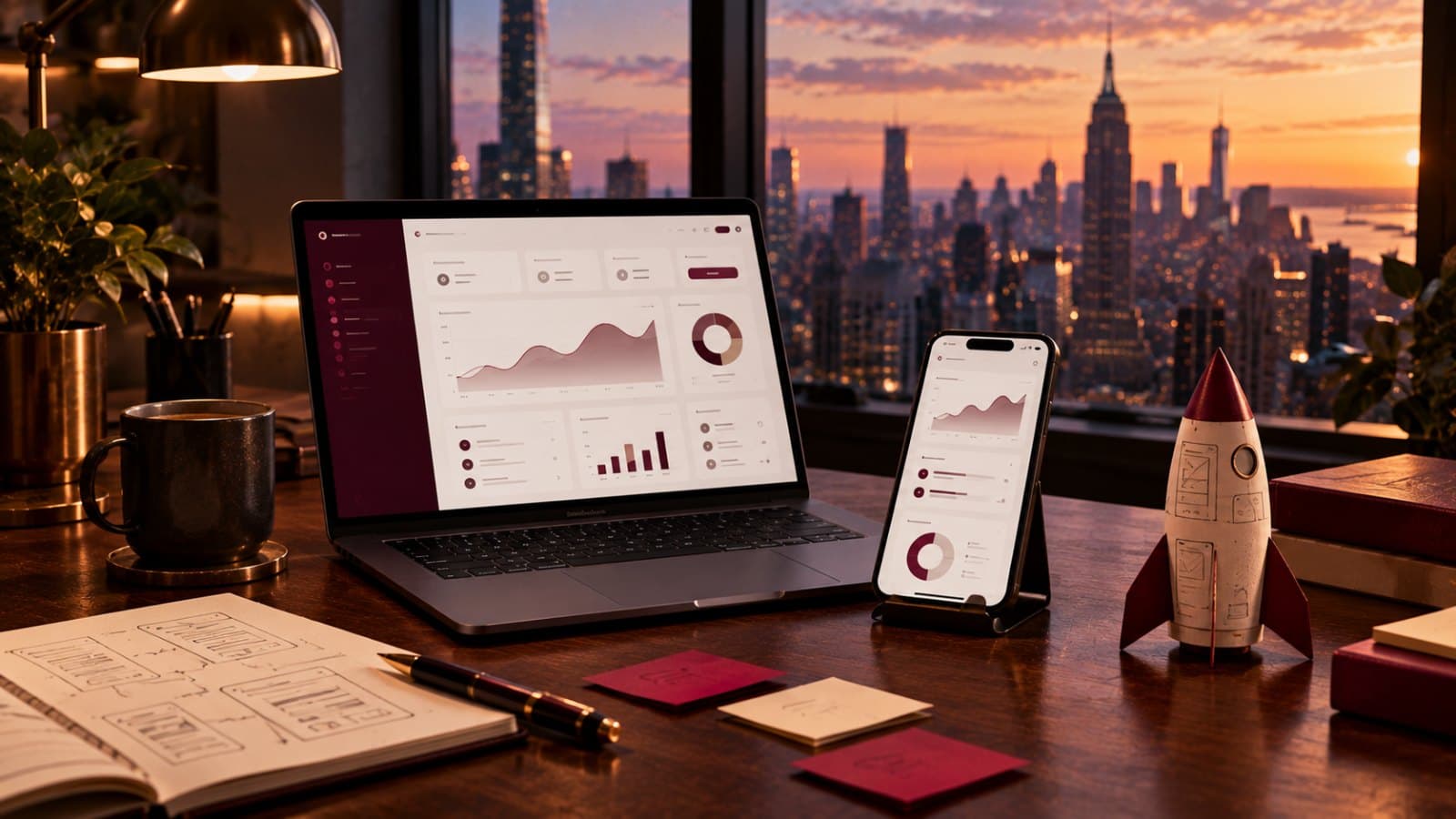
Short answer: a good MVP proves one core value for one specific user, ships in 8 to 12 weeks and is built so it can grow. Start with discovery to cut scope to the essentials, design the critical flows properly, build with a mainstream stack, launch to real users and iterate in short sprints based on what they do, not what they say.
Step 1: Define the one job your MVP must do
Write a single sentence: for whom, what problem, and what outcome. Every feature that does not serve that sentence waits for version two.
Step 2: Run a short discovery
One to two weeks of interviews, competitor review, user flows and technical risks. This is where most money is saved, because it prevents building the wrong thing.
Step 3: Design the critical flows, not every screen
Onboarding, the core action and the moment of value deserve real design. Settings pages can be simple. Users judge your product by the first five minutes.

Step 4: Choose a boring, scalable stack
React or Next.js on the web, React Native or Flutter for mobile, Node.js or Python behind it and a managed Postgres database cover most MVPs. Mainstream tools mean easier hiring later.
Step 5: Build in two-week sprints
Each sprint ends with a demo you can click. Authentication, payments, analytics and error tracking go in early, because adding them later is painful.
Step 6: Launch, measure and iterate
Launch to a small group, watch activation and retention and talk to users weekly. Then double down on what works.
How to choose an MVP development company
- They push back on scope instead of agreeing to everything.
- They can show live products, not only designs.
- Design and engineering are one team.
- You own all code, accounts and IP.
- They plan for version two, not just launch day.
Frequently asked questions
How long does MVP development take?
Most MVPs launch in 8 to 12 weeks including discovery, design, build and testing.
Can an offshore team build an MVP for a US startup?
Yes, when there is daily overlap with US hours, one senior lead, sprint demos and clear IP ownership. Many US startups work this way.
Does The BrandBerry build MVPs for US startups?
Yes. We take US founders from idea to launched product, including the brand, the marketing site and the app.
Want this for your brand?
Book a free strategy callKeep reading
How to Write a Software Development Brief (With a Free Template)
A clear brief gets you better proposals, more accurate timelines and fewer surprises. Here is what to include when you brief a web, app or software development company, with a template you can copy.
14 May 2026 · 9 min readHow to Choose a Branding Agency in the USA: A 2026 Guide for Founders
The best branding agency for a US company is the one that understands your category, puts senior people on your account and can show work that moved real businesses. Here is how to tell them apart.
10 March 2026 · 8 min readBranding for US D2C and SaaS Startups: What Wins in 2026
American D2C and SaaS markets are crowded, fast and unforgiving. These are the brand moves that help startups stand out, convert and raise.