Shopify gets most UAE brands selling fast. Custom or headless builds win when you need bilingual depth, complex catalogues or unusual checkout flows. Here is how to choose.
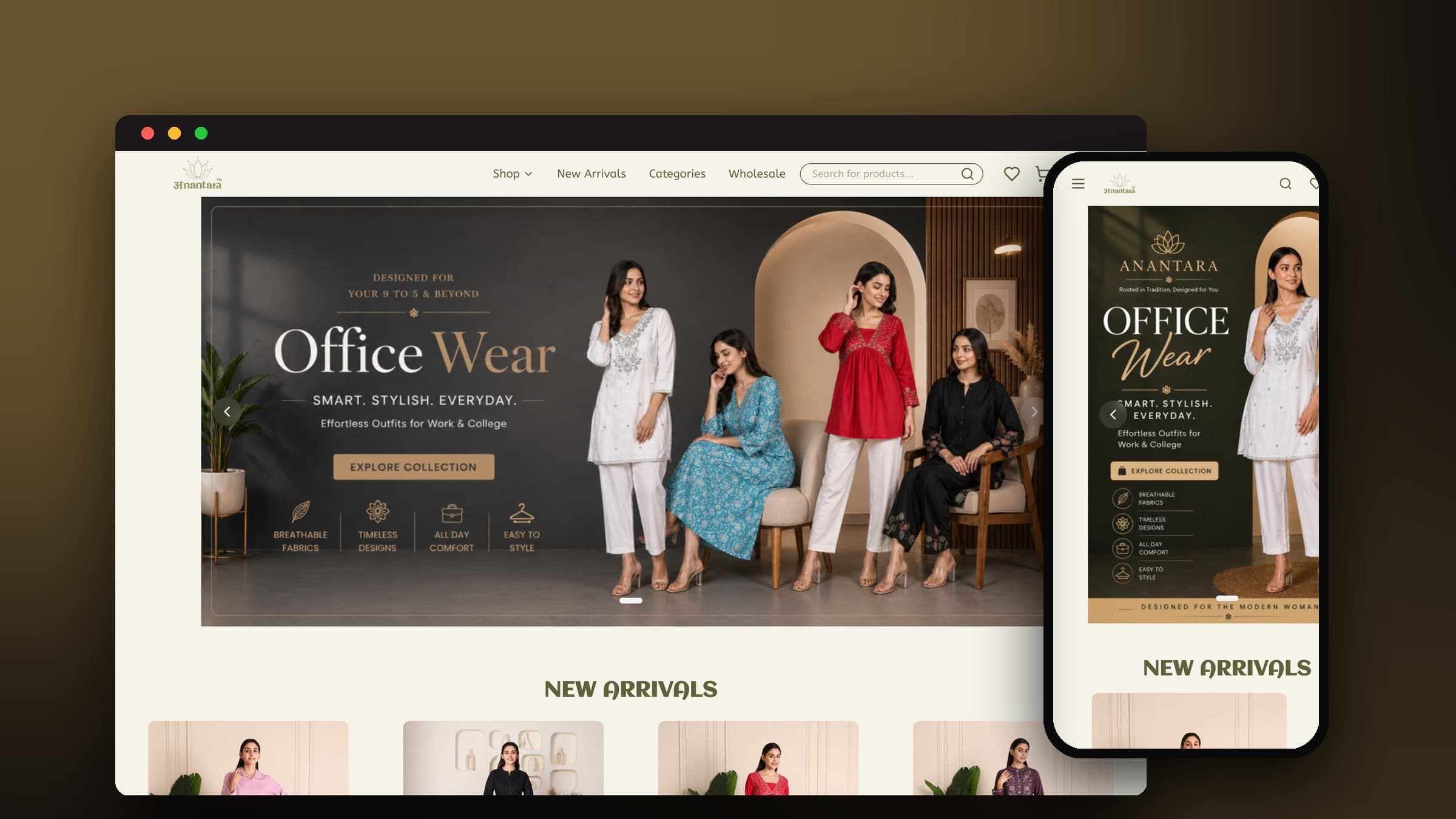
Short answer: most UAE brands should start on Shopify, with a custom theme, proper Arabic support and local payment and delivery integrations. Move to a headless or fully custom build when you need complex catalogues, B2B pricing, unusual checkout flows, multiple markets with different rules, or a fully bespoke brand experience that a theme cannot deliver.
Why Shopify is the default
Shopify handles hosting, security, checkout and payments, so your team can focus on products and marketing. Its app ecosystem covers reviews, loyalty, subscriptions and marketing tools, and it supports multiple currencies and languages.
What UAE brands need to check
- Arabic: a theme that truly supports right-to-left layouts, not just translated text.
- Payments: local gateways and options such as cash on delivery and buy-now-pay-later services popular in the region.
- Delivery: integrations with local couriers and same-day or next-day options in Dubai and Abu Dhabi.
- VAT: correct tax settings and VAT-compliant invoices.
- Multi-market: selling to Saudi Arabia and the wider GCC with the right currencies and shipping rules.
When custom or headless makes sense
A headless build keeps Shopify, or another commerce engine, for products and checkout while the storefront is custom-built, often with Next.js. A fully custom platform goes further. Consider these when:
- Your catalogue has complex variants, bundles or made-to-measure options.
- You sell B2B and B2C with different pricing and approval flows.
- Your brand needs an experience no theme can deliver, with rich storytelling and motion.
- Performance and SEO matter at scale and your theme is slowing you down.
- You need deep integration with an ERP, warehouse or custom logistics system.

The trade-offs
Speed to launch
Shopify with a custom theme can launch in weeks. Headless and custom builds take longer and need more planning.
Running costs and ownership
Shopify means monthly platform and app fees but little maintenance. Custom builds mean you own more, and maintain more.
Flexibility
Themes are flexible within limits. Headless and custom builds remove those limits, at the cost of complexity.
How we help UAE brands decide
We start by looking at your catalogue, markets, operations and growth plans. For most brands we design and build a custom Shopify theme that feels bespoke and is fully bilingual. For brands with complex needs we build headless storefronts or custom platforms, integrated with your ERP, payments and couriers.
Frequently asked questions
Is Shopify good for Arabic stores?
Yes, with the right theme and setup. Shopify supports Arabic, but the theme must be built or adapted properly for right-to-left layouts and Arabic typography.
Can Shopify handle cash on delivery in the UAE?
Yes. Cash on delivery can be offered alongside cards and local payment providers.
When should we move from Shopify to headless?
When your theme limits your brand experience or speed, when you sell across several markets with different rules, or when you need deep custom integrations.
Does The BrandBerry build e-commerce websites in the UAE?
Yes. We design and build Shopify stores, headless storefronts and custom e-commerce platforms for brands in Dubai and across the UAE, together with the brand identity behind them.
Want this for your brand?
Book a free strategy callKeep reading
How to Choose an App Development Company in Dubai (2026 Buyer's Guide)
Dubai has hundreds of app developers claiming to be number one. Use these criteria to shortlist a partner that will ship a product UAE users actually keep.
17 February 2026 · 8 min readHow to Launch an Off-Plan Project Website in Dubai
An off-plan launch website has weeks to build trust and capture serious buyers. Here is what it needs, from bilingual content and payment plans to lead routing for brokers.
20 January 2026 · 7 min readWebsite Design in Dubai: What UAE Customers Expect in 2026
UAE customers browse on premium phones, switch between English and Arabic and expect the polish of the city around them. Here is what a website needs to compete.